
Introduction
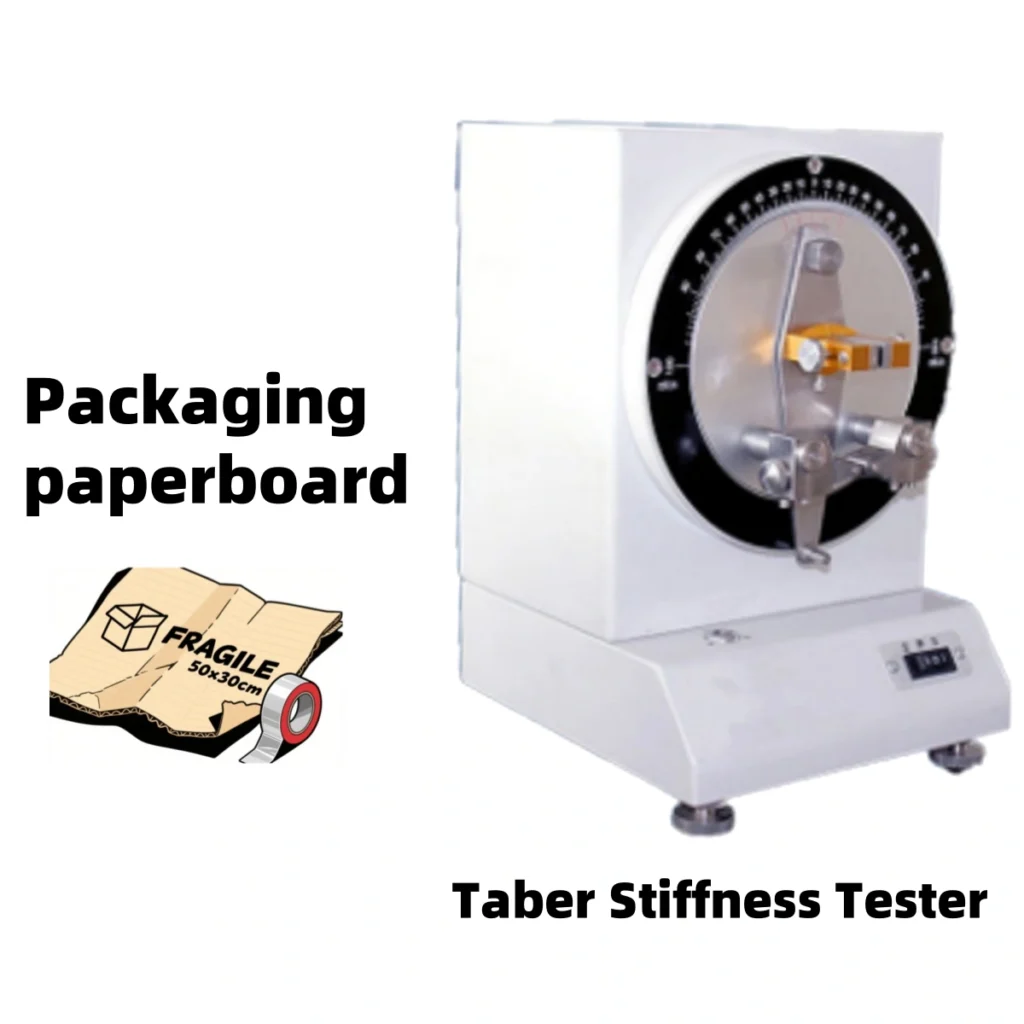
In the world of modern packaging, packaging paperboard must do more than simply contain a product—it must protect, present, and perform. One of the most critical physical properties of paperboard is stiffness, which directly affects everything from manufacturing efficiency to consumer perception. The taber stiffness test has become an essential method for quantifying this property and ensuring materials meet functional demands across the packaging supply chain.
Understanding Taber Stiffness
Taber stiffness refers to the bending resistance of a sheet material, measured using a specific pendulum-type instrument. The result reflects how much torque is required to deflect a material sample by 15 degrees. This value is crucial for determining the structural behavior of packaging paperboard under various handling and usage conditions.
Stiffness affects how a material folds, cuts, glues, and stands. If the paperboard is too soft, packaging may collapse or appear flimsy. If it is too stiff, it might crack or resist forming operations. Thus, stiffness testing is not just a quality control step—it is integral to design and function.
The Importance of Stiffness Testing for Packaging Paperboard
1.Ensures Packaging Integrity
Proper stiffness helps boxes and cartons maintain their shape during stacking, shipping, and shelf display. For example, food cartons, medical packaging, and folding boxes all depend on consistent board stiffness to prevent crushing or warping.
2.Facilitates Machinability
During high-speed converting operations like die-cutting, folding, and gluing, the paperboard must respond predictably. Variations in stiffness can lead to machine jams, poor folds, or adhesive failures.
3.Enhances Consumer Perception
Stiffer packaging often conveys a higher-quality feel. Whether it’s a cosmetics box or a pharmaceutical carton, packaging that feels strong and durable increases consumer confidence.
4.Reduces Material Waste
By accurately measuring stiffness, manufacturers can optimize board thickness and fiber composition. This reduces over-engineering and material usage without compromising functionality.
5.Supports Compliance and Traceability
Meeting standards like ASTM D5342 or TAPPI T489 requires validated stiffness measurements. This supports compliance with ISO 9001, GMP, or industry-specific audit requirements.
Stiffness Test Procedure for Packaging Paperboard
The stiffness test procedure for packaging paperboard involves a series of standardized steps to ensure reliable and repeatable results:
Sample Conditioning
- Test specimens are conditioned at 23°C and 50% RH for 24 hours to eliminate moisture-related variability.
Specimen Preparation
- Rectangular samples, typically 38 mm × 70 mm, are cut along machine and cross-machine directions to evaluate anisotropy.
Testing with a Taber Stiffness Tester
- The specimen is mounted in a clamp with a fixed overhang.
- A pendulum applies force at a set distance from the clamping point.
- The torque required to bend the sample 15° is measured and recorded.
Result Analysis
- Higher torque indicates greater stiffness.
- The values help compare material grades, batches, or suppliers.
Applicable standards:
- ASTM D5342: Flexural rigidity (Taber method)
- TAPPI T489: Bending resistance of paperboard
- ISO 2493: Bending stiffness – Taber-type testing
Industries Where Stiffness Testing Matters
The taber stiffness test is widely applied across multiple sectors where packaging paperboard is a critical component:
- Food & Beverage Packaging: From cereal boxes to beverage carriers, consistent stiffness ensures safe transport and appealing presentation.
- Pharmaceutical & Medical: Cartons must remain intact during handling and provide adequate protection against contamination or mechanical stress.
- Personal Care & Cosmetics: High-end brands use premium paperboard that requires both visual appeal and tactile strength.
- E-Commerce: Online shipping demands stronger board to prevent damage during long-distance transportation.
- Printing & Graphics: Business folders, greeting cards, and brochures need accurate stiffness to maintain design integrity.
Choosing the Right Taber Stiffness Tester
For high-quality packaging outcomes, the measurement tool must be as reliable as the material itself. Cell Instruments’ Taber Stiffness Tester provides the precision, repeatability, and user-friendliness demanded by modern QA environments. Key features include:
- High-accuracy torque sensor
- Dual-direction (MD/CD) testing capabilities
- Digital control interface with data export and statistics
- Compliance with ASTM, TAPPI, and ISO standards
Whether you are testing sample lots in R&D or monitoring incoming materials in production, Cell Instruments delivers the trust and technical support global manufacturers rely on.
Advanced Benefits and Custom Integration
In addition to stand-alone stiffness testing, many organizations are now integrating taber stiffness measurements into broader quality and digital workflows:
- MES/ERP integration for data traceability
- Automated sample feeding for high-volume QA labs
- Customized fixture design for non-standard materials
- Software analytics for long-term trend analysis
Cell Instruments also offers tailored solutions to meet customized stiffness testing requirements, from multilayer structures to biodegradable substrates.
Conclusion
In today’s competitive packaging landscape, understanding and controlling taber stiffness is no longer optional—it’s essential. From ensuring functional packaging to enhancing customer experience, stiffness testing for packaging paperboard offers quantifiable benefits at every stage of the value chain.
If you’re looking to elevate your material testing process, the Cell Instruments Taber Stiffness Tester provides the accuracy, compliance, and scalability your business needs.
Let your packaging stand stronger—starting with the right stiffness.
 EN
EN  AR
AR  BG
BG  CS
CS  DA
DA  DE
DE  EL
EL  ES
ES  ET
ET  FI
FI  FR
FR  HU
HU  ID
ID  IT
IT  JA
JA  KO
KO  LT
LT  LV
LV  NB
NB  NL
NL  PL
PL  PT
PT  RO
RO  RU
RU  SK
SK  SL
SL  SV
SV  TR
TR  UK
UK